
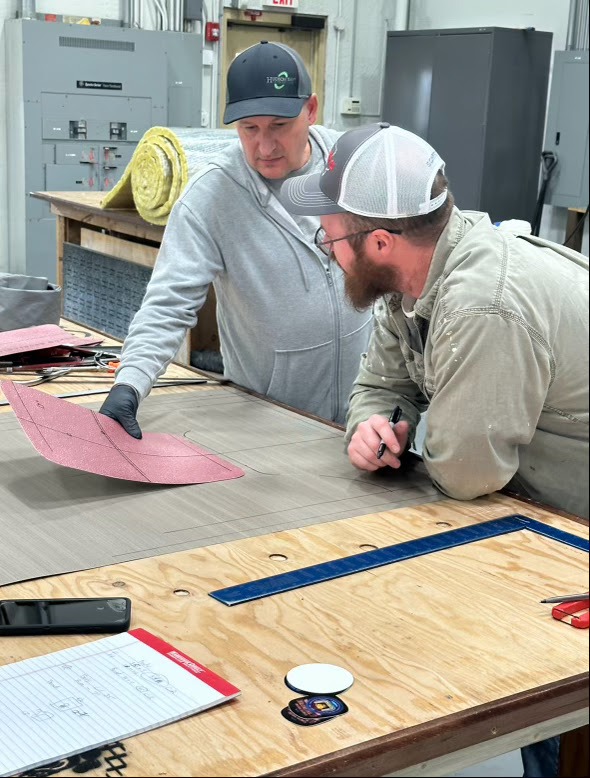
For many years, college was viewed as the preferred path to career success. For professions such as medicine, law, engineering, and other highly specialized fields, extended education is necessary.
However, attending college simply to improve one’s career prospects is often overrated. The idea that every student must continue from high school directly into college has placed unnecessary pressure on those who choose a different path.
According to the College Board, the average cost of a four-year in-state college degree now approaches $124,000, and with many students never completing their degree, the traditional college route deserves closer scrutiny.
College should be viewed as one option, not a mandate. Students need access to multiple pathways that build self-reliance, practical skills and real employment opportunities. A person’s drive, discipline and willingness to work hard can be just as important to long-term success as the level of education they complete.
For decades, young people have been told that a four-year college degree is the safest route to financial security. For some careers, that advice still holds true. However, it is not the only pathway.
With the overall union construction industry facing a shortage of workers, I felt compelled to share my insights about post-high school education.
I decided to speak up because I am among the few people who successfully completed both educational paths. I not only earned two bachelor’s degrees but also completed a four-year Registered Apprenticeship Program.
More people need to know there is a financially lucrative career pathway that does not require a college degree.
For students who are practical, hands-on and ready to build a stable future without taking on years of debt, a Registered Apprenticeship Program within the union construction industry deserves serious consideration. In many cases, it offers a faster path to income, stronger early-career financial rewards and direct access to jobs that communities urgently need.
A First-Hand Account
This subject is deeply personal and important to me.
For 20 years, I served as Apprentice Coordinator for the International Association of Heat and Frost Insulators and Allied Workers Local 32 in Newark, N.J. I dedicated much of that time to recruiting people into the apprenticeship program.
I saw firsthand the stigma surrounding the decision not to attend college, as well as negative misconceptions about unions, and I felt compelled to challenge both.
I sought opportunities to speak in classrooms at high schools and vocational schools, where I explained how unions work and compared apprenticeship with college. Some students scoffed, implying that going to college guaranteed their future. I often gained their attention by noting that 40 percent of students leave college after the first year.
We can all agree that construction is not for everyone. But neither is college. People deserve an honest view of both paths, especially when academia often presents college as the only route to success and school systems are judged by how many students enroll.
Earn While You Learn Instead of Paying Before You Work
The biggest financial difference between a Registered Apprenticeship Program and college is simple: registered apprentices begin earning wages immediately. A college student often spends four years (or more) paying tuition, fees, housing, books and other costs before entering a full-time career. By contrast, a building trades apprentice receives paid on-the-job training while also learning the technical knowledge required for the trade.
This matters because income earned between the ages of 18 and 22 is not just spending money; it can fund rent, transportation, savings and retirement contributions, plus serve as proof of work experience. Instead of graduating with loan payments, an apprentice can complete training with years of job history, industry connections and a credential tied directly to employment.
Lower Debt Means More Financial Freedom
College can be a strong investment, but it is also an expensive one. Tuition and living costs can leave graduates carrying massive debt before their careers begin.
Registered apprenticeships usually have much lower upfront costs, and many are sponsored by employers, unions or industry organizations. This lower debt burden gives apprentices more flexibility: they can qualify for a mortgage sooner, save for tools or certifications, support a family or start a small business without the weight of large monthly loan payments.
Construction Careers Offer Strong Employment Rewards
Construction is not a narrow fallback option; it is a major sector that needs trained workers to build, repair and modernize homes, schools, hospitals, roads, bridges, power systems and public infrastructure. Skilled trades such as electrical, plumbing, pipefitting, HVAC, carpentry, welding, mechanical insulation and heavy equipment operation support nearly every part of the economy. When the labor market needs these skills, apprentices move toward occupations with clear demand rather than entering a crowded job market with a general degree and no specialized experience.
Employment rewards also come from the structure of the apprenticeship itself. Registered apprentices train under experienced workers, build a professional reputation and often move into full-time positions with the same employers or industry networks that trained them. This connection between training and work is a major advantage over educational paths where students must still search for an entry-level job after graduation.
The Financial Head Start Begins Earlier Than You Think
Supporters of college often point to lifetime earnings, and it is true that some degrees lead to high-paying careers. However, the comparison should not begin at age 22 after college graduation; it should begin at age 18, when the decision is made. During the years when a student is in college and likely beginning to pay for at least a portion of their education, an apprentice may already be earning wages, receiving raises and building retirement eligibility or benefits. That early head start can be powerful, especially when paired with minimal education debt.
By the time a college graduate is applying for a first full-time job, a building trades apprentice may already have several years of paid experience and a clearer path to journey-level wages. Depending on the trade, they may already have graduated from the Registered Apprenticeship Program and begin earning journeyman wages. In practical terms, this means the apprentice may be ahead in net worth, work history and confidence before the degree holder has made the first student loan payment.
Apprenticeships Build Careers, Not Just Jobs
Becoming an apprentice in a Registered Apprenticeship Program is not the end of education; it is a different kind of education. Union construction apprentices learn safety, math, blueprint reading, technology, project coordination and problem-solving skills on real jobsites.
Many move into supervisory roles, estimating, inspection, project management, training, union leadership or business ownership. The pathway can also stack with later education, certifications, licenses, and specialized training.
This is an important point for families: choosing a construction apprenticeship does not mean giving up ambition. It means choosing a career route where ambition is measured in skill, reliability, productivity, leadership and financial independence. The best tradespeople are not simply laborers; they are technicians, planners, problem solvers and essential contributors to the built environment.
A Smarter Question Than “College or No College?”
The real question is not whether college is good or bad. The smarter question is which pathway offers the best return for a particular person, career goal and financial situation.
A student who wants to become a doctor, engineer, architect or teacher may need college. A student who wants a steady income, practical skills, lower debt and a direct route into a high-demand field should not be pushed away from construction simply because it is not the traditional academic path.
For many young adults, a construction apprenticeship is not a second choice. It is a financially disciplined first choice. It rewards work ethics early, limits debt, builds employable skills and connects training directly to opportunity.
In an economy where both college costs and skilled labor needs continue to rise, construction apprenticeships make a strong case: the path to a rewarding career does not always run through a lecture hall. Sometimes, it starts on a jobsite.
Does Social Stigma Around Construction Apprenticeships Still Exist?
Yes, there is still a social stigma attached to a building trades Registered Apprenticeship Program compared to a traditional college education, and that needs to change. Ironically, the fix is more education, not less.
For decades, society has emphasized four-year college degrees as the default path to success, often viewing the building trades as a “last resort” rather than a strategic career choice. Misconceptions about construction – such as it being low-skill, low-paying or physically demanding – persist, even though modern trades require advanced technical skills and certifications and offer competitive wages.
Many high schools lack vocational programs, and guidance counselors often steer students toward academic tracks, leaving the Registered Apprenticeship Program less visible. Older generations may see apprenticeships as a rite of passage, but younger workers often view them as outdated.
This perception contributes to labor shortages in construction, as fewer young people enter the field despite strong demand and high earning potential. It also limits workforce diversity and can deter talented individuals from pursuing careers in the building trades.
Data increasingly shows that union apprenticeships in the construction industry now rival college degrees in terms of earnings and benefits. First-year journeymen, individuals who complete the apprenticeship program, often earn as much as or more than college graduates, avoid student loan debt and gain transferable skills. Modern construction is also more high-tech, with roles in building information modeling (BIM), engineering and project management challenging outdated stereotypes. Rising wages, improved benefits (full family health insurance and a retirement plan) and growing demand for skilled trades are pulling younger workers back into the field.
While the stigma between college and construction apprenticeships still exists – especially among younger generations, it is being challenged by economic realities, industry growth and awareness campaigns. For many, the choice is no longer about “lesser” status, but about career fit, debt avoidance and long-term earning potential.
Educators and school counselors are in the best position to close that awareness gap, and they don’t have to do it alone.
TradesFutures, the nonprofit that runs the Multi-Craft Core Curriculum (MC3) developed by North America’s Building Trades Unions (NABTU), offers a 120-hour Apprenticeship Readiness Program that introduces students and adults to the trades and prepares them to apply for Registered Apprenticeship Programs.
Its recent report, Scaling Placement Pathways: Promising Practices from Apprenticeship Readiness Programs, outlines the practices that help these programs place graduates into apprenticeships. In 2025, more than 200 TradesFutures-supported programs served over 7,700 participants in 34 states.
Educators interested in bringing apprenticeship readiness to their students can contact Marselina Griggs at marselina@tradesfutures.org. You can also reach out to TradesFutures’ staff for additional information about the program.
Besides TradesFutures, educators can also visit the Insulation Industry International Apprenticeship and Training Fund‘s website for information on the Mechanical Insulator’s Registered Apprenticeship Program. The IIIATF is the training arm of the Insulators Union, and has affiliated training programs throughout the U.S. and Canada.
I was fortunate to have experienced both college and a Registered Apprenticeship Program.
My family members told me about the benefits of the union construction career pathway while my school guidance counselors focused almost exclusively on college.
This gap inspired me to help others discover opportunities they might not otherwise consider. It is my hope that you take an honest look at a career in the trades before deciding what is the best pathway for your future.