
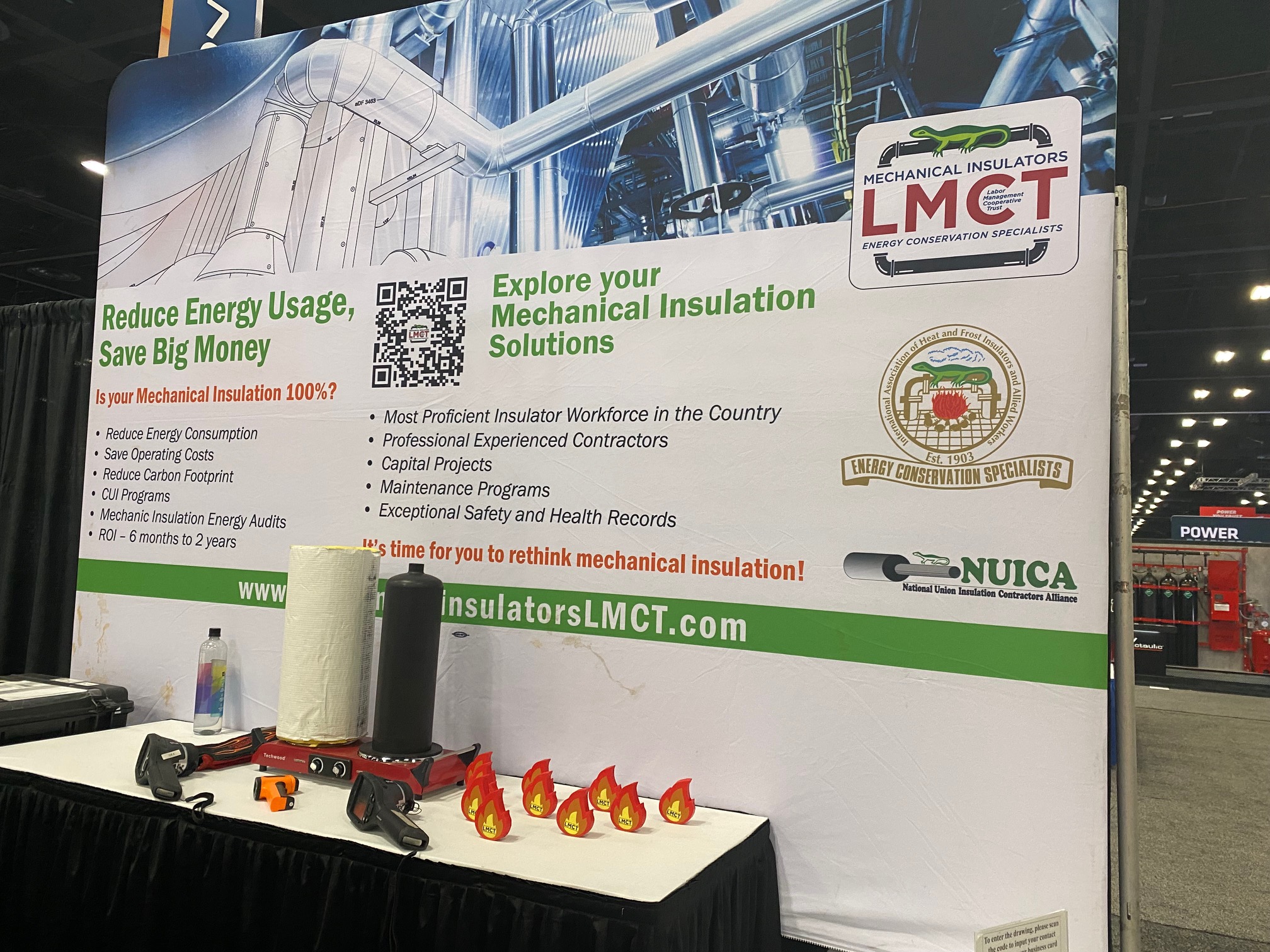
The Insulators Labor-Management Cooperative Trust (LMCT) participated in PowerGen 2026 (Jan. 20–22) at the Henry B. Gonzalez Convention Center in San Antonio, Texas, to spotlight a proven but often under-specified lever for power plant performance: Mechanical insulation.
With power generation teams facing rapid load growth, tighter operating margins, and increasing pressure to reduce emissions, mechanical insulation is not a “nice-to-have.” It is a measurable, engineering-aligned strategy for reducing heat loss, improving safety and stabilizing process performance across steam, hot water and high-temperature systems.
Why mechanical insulation matters in power generation
PowerGen is a gathering place for engineers, operators and manufacturers focused on reliability and efficiency. Many solutions showcased are complex and capital-intensive. Mechanical insulation is different, as it addresses the fundamentals of energy transfer and can deliver meaningful gains without changing core equipment.
In power generation environments, mechanical insulation supports:
- Lower operational costs: Less heat loss means less fuel required to maintain process temperatures.
- Higher efficiency and output stability: Better temperature control helps systems operate closer to design intent.
- Improved worker safety: Insulation reduces surface temperatures and helps mitigate burn hazards.
- Sustainability goals: Conserved energy can translate into reduced emissions intensity.
The PowerGen 2026 thermal imaging demonstration: “Seeing” heat loss
A key feature of the LMCT exhibit was an interactive thermal imaging demonstration. Attendees compared two live pipes – one bare and one professionally insulated – using an infrared camera.
Thermal imaging is widely used in industrial maintenance, but the side-by-side comparison made the impact unmistakable: A bare pipe visibly radiates energy, while an insulated pipe retains heat and reduces surface temperature.
For many attendees, the demonstration reframed insulation from a background specification to a frontline efficiency tool, especially relevant as plants push harder to meet demand.
“This display was incredibly informative and reinforced the importance of mechanical insulation,” said Sahadi Patel, a PowerGen attendee. “I wasn’t fully aware of the scale of benefits insulation brings to a facility. I look forward to sharing this with my engineering team to ensure we specify insulation to save energy and money for our clients.”
From “hidden advantage” to best practice
Mechanical insulation has historically been treated as a secondary line item – installed, then forgotten. But in an era of load growth and cost scrutiny, that mindset leaves money on the table.
The LMCT’s presence at PowerGen 2026 reflects a broader shift: Positioning mechanical insulation as a standard part of modern power generation strategy alongside reliability programs, predictive maintenance and performance optimization.
Action steps for engineers and plant teams
If you want mechanical insulation to perform like an asset, not an afterthought, focus on these next practical moves:
- Audit heat loss and surface temperature risks. Walk down steam lines, valves, flanges and high-temperature equipment. Even small uninsulated sections can create outsized losses.
- Use thermal imaging to prioritize fixes. Infrared scans can identify “hot spots” where insulation is missing, damaged or degraded and enable targeted maintenance.
- Specify mechanical insulation early in design and retrofit planning. Treat mechanical insulation as part of the system, not a finishing step. Proper specification improves long-term ROI.
- Collaborate with mechanical insulation professionals. Working with trained mechanical insulation experts helps ensure correct material selection, thickness, jacketing and installation quality.
Frequently Asked Questions
1) How does mechanical insulation improve power plant ROI?
Mechanical insulation can improve ROI by reducing fuel consumption and operating costs associated with heat loss. Many industrial insulation projects can pay back within 6–24 months, depending on system temperatures, operating hours, and the scope of uninsulated or under-insulated assets.
2) Can thermal imaging detect energy loss in industrial piping?
Yes. Infrared thermal imaging can reveal heat radiation and identify areas where insulation is missing, damaged, or performing below expectations. Comparing insulated and bare surfaces helps teams prioritize repairs and reduce avoidable energy loss.
3) What are the safety benefits of mechanical insulation?
Mechanical insulation reduces surface temperatures to help prevent contact burns and supports safer work environments. In some applications, insulation systems can also contribute to noise reduction and improved personnel comfort.
4) Why is mechanical insulation important during load growth?
As demand increases, plants must operate efficiently and reliably. Mechanical insulation helps maintain stable process temperatures and reduces wasted energy, supporting higher performance without unnecessary fuel overhead.
Closing perspective
Power generation is entering a period where incremental efficiency improvements matter. Mechanical insulation is one of the most practical, physics-based ways to reduce heat loss, protect workers and support performance, especially when specified and maintained as part of the overall system.
If your team is evaluating efficiency upgrades, start with what you can’t afford to lose: your heat.