
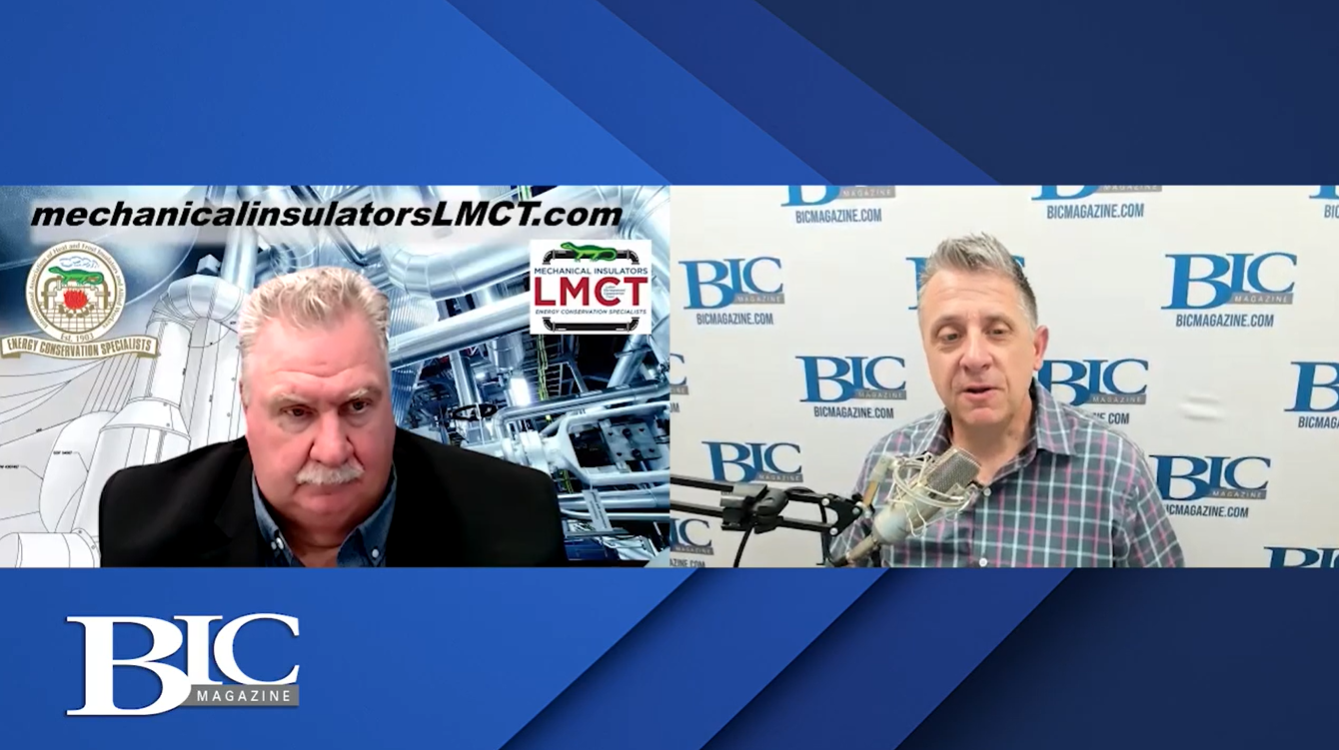
Pete Ielmini, Executive Director of the Heat and Frost Insulators Labor Management Cooperative Trust (LMCT), recently joined Jeremy Austerberger on the BIC Magazine Podcast to address one of the most urgent issues facing the construction industry: mental health and suicide prevention.
In a wide-ranging conversation, Ielmini discussed the realities of construction work that can increase risk factors such as financial stress, job insecurity, chronic pain and a culture that often rewards toughness. He also outlined practical steps the industry can take to reduce stigma, expand access to support and make mental well-being a routine part of jobsite safety.
Why construction workers face unique pressures
Ielmini emphasized that many people outside the trades do not fully understand what it means to make a living in construction.
He pointed to several stressors that can compound over time:
- No work = no pay: If a worker wakes up sick or injured, they may not be paid.
- Project-based employment: Construction is often a cycle of building toward completion, then worrying about the next job.
- Financial pressure on families: As responsibilities grow, the uncertainty of work can create sustained stress.
- Physical wear and chronic pain: Construction workers are “athletes” who rely on their bodies to earn a living, and the job becomes harder with age.
Ielmini also noted that chronic pain can lead some workers toward dependence on painkillers or other substances simply to keep up with the physical demands of the work.
Make mental health part of safety culture
A major theme of the podcast was that mental health should be treated with the same seriousness as physical safety.
Ielmini shared a striking comparison that changed his own approach: construction workers are dying by suicide at a rate far higher than fatalities from jobsite accidents, yet mental health historically has not received the same attention in safety programs.
He described the evolution of construction safety over the past several decades, from being “an afterthought” to becoming a core operational priority supported by training, equipment and daily reinforcement. In his view, the same model applies to mental well-being:
- Bring the issue into the open
- Normalize the conversation
- Provide clear resources and pathways to help
- Reinforce the message consistently (not just once)
Leadership and coworkers: the first line of defense
Ielmini explained that coworkers and frontline supervisors are often best positioned to notice when something is “off.” Crews spend long hours together, day after day, and small changes in behavior, mood or performance can be visible to the people closest to the work.
He encouraged a simple but powerful step: Ask the question.
Ielmini also addressed a common fear: asking someone directly whether they are thinking about self-harm might “put the idea in their head.” After consulting with professionals, he said he learned the opposite is true: asking can be a lifeline and open a door for someone to seek support — even if not immediately.
IMAP and YouTurn Health: confidential support that works
Ielmini highlighted the Insulators’ Member Assistance Program (IMAP), supported by Mechanical Insulators LMCT and delivered with the help of YouTurn Health.
The goal is not to turn supervisors into clinicians, but to help leaders recognize when someone may need support and to connect them to professionals.
A key point Ielmini returned to repeatedly: confidentiality is essential. If workers fear judgment from peers, union leadership or contractors, they are far less likely to reach out.
What the industry still gets wrong
Ielmini identified one persistent gap: overreliance on one-time training.
Awareness sessions matter, but they are not enough on their own. Like any safety initiative, mental health support must be reinforced and revisited. Ielmini noted that YouTurn Health provides a large library of short, practical video resources — covering topics from financial stress to suicide prevention — that workers and leaders can access as needed.
Immediate help: 988 and the national lifeline
For anyone who needs help now — or is worried about someone else — Ielmini emphasized a critical resource available nationwide:
- Call or text 988 for immediate mental health support
- Visit 988lifeline.org
Why Ielmini is personally committed to this work
Ielmini closed by sharing why he is so passionate about the topic. Earlier in his career, he often found himself trying to help members through difficult situations without having the professional resources to do so, and he remembered what it felt like to care deeply, but not know where to turn.
Today, with the support of LMCT trustees, the Insulators International and partner organizations, Ielmini said his goal is straightforward: ensure that when someone needs help, it is not a dead end.
Watch the podcast
Watch the entire podcast for more on these topics.