
IMAP News October 2025
Insulators Member Assistance Program Update
Register Now: IMAP Monthly Town Halls On Behavioral Health In The Workplace

We’ve had an amazing response to Youturn Health and the Insulators Member Assistance Program (IMAP), in no small part to the dedication of the Local Business Managers and Union Leaders who helped us spread the word. Thank you for your support and dedication!
In an effort to bring Local Leaders together, we’re launching monthly IMAP Town Hall meetings. Each month, Youturn Health will cover a topic related to behavioral health, touch on trends in the industry and provide updates on the IMAP program.
Each Town Hall will also have a dedicated time for Q&A for attendees to ask questions and share what’s working for their Locals.
The following are the details for the first three meetings.
Building a Culture of Care: Foundations of Behavioral Health in the Workplace
Tuesday, October 14
2-3 p.m. EST
Learn about behavioral health in the workplace and find out how even small challenges to our wellness can affect us at home and at work. This webinar will cover:
- The spectrum of behavioral health and the difference between surviving and thriving
- How to break the stigma that keeps people from getting help
- Practical strategies to build a supportive workplace culture
Recognizing And Responding To Mental Health Challenges
Tuesday, November 11
2-3 p.m. EST
As managers and leaders in the construction industry, it’s critical to recognize when an employee may be struggling with a mental health-related challenge. This session will help you feel more at ease approaching a coworker about their mental health as we walk through:
- Early warning signs of stress, anxiety, depression and burnout
- How to have a conversation with an employee about their mental health
- Available mental health resources to support your employees
Substance Use In The Workplace Awareness And Support
Tuesday, December 9
2-3 p.m. EST
You don’t have to wait until someone hits rock bottom to get them help for a substance use issue. In fact, if it’s addressed early enough, many people are able to self-correct their substance use without having to go to treatment. This session will address:
- The signs of workplace impairment
- Reducing stigma around substance use challenges
- How to respond compassionately and constructively when you’re concerned about an employee’s substance use
Rich’s Rants
Each month, the LMCT IMAP Newsletter will feature the “rants” of Youturn Health Chief Clinical Officer Rich Jones.
Check out these short vidoes as Rich, who is recognized nationally as a subject matter expert on substance use disorder (SUD) and healthcare and recovery integration, introduces viewers to concepts and ideas that can help you make it through the day after dealing with stress and everyday issues.
October is National Substance Abuse Prevention Month

The Role of Peer Support in Treating Substance Use
Peer coaches use evidence-based strategies and their lived experience to help you meet your wellness goals. Lived experience means that the coaches have overcome their own personal struggles with substance use, mental health, etc., or they are the loved one of someone who has overcome those struggles.
Peer coaches can directly empathize with the person they are coaching, which is critical because issues like substance use disorder (SUD) are often chronic conditions that get worse if they’re untreated.
Stigma often prevents people from reaching out. But if you reach out to someone who’s been there before, they don’t judge you. They know from personal experience that SUD is a disease and not a moral failing. That empathy helps break down the stigma that keeps people from getting help.
11 Things Everyone Should Know About Addiction and Recovery
When Richard Jones was in active addiction, he was vaguely aware of what “addiction” was.
His job exposed him to the mental health world, as he worked within a healthcare system.
“I was not a clinician, so my knowledge remained on a superficial level,” he wrote. “However, I was aware that the Diagnostic and Statistical Manual (DSM) was “The Book” used to diagnose both mental health and substance use disorders.”
In this blog, he discusses the consequences of his addiction, denying the criteria of addiction and what everyone should know about addiction and recovery.

How to Ask for Help for A Mental Health or Substance Use Issue
If you’re dealing with a substance use or mental health-related challenge, one of the best things you can do is ask for help. So why is it so hard to do?
We are often raised to be self-reliant, and asking for any type of help can make us feel weak or vulnerable, leaving us open to rejection or criticism. You may also think that asking for help makes you a burden or puts you in debt to someone. Additionally, there is a lot of stigma around mental health and substance use. It’s tough to ask for help in general, let alone for something that can feel as big and heavy as struggling with mental health or substance use.
The truth is, asking for help can be difficult, but it’s a sign of tremendous strength. It shows courage, resilience, and a drive to get better.
What Is Substance Use Disorder Infographic
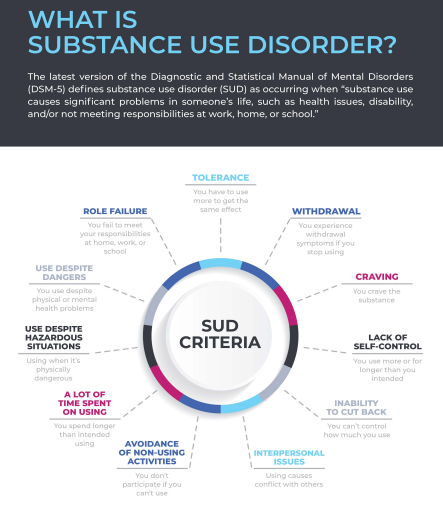
The latest version of the Diagnostic and Statistical Manual of Mental Disorders (DSM-5) defines substance use disorder (SUD) as occurring when “substance use causes significant problems in someone’s life, such as health issues, disability, and/or not meeting responsibilities at work, home or school.”
October is Depression and Mental Health Awareness Month

Out of the Abyss
I have been to the abyss. More than once. It sucks. It drains every ounce of joy and energy that you have. It paralyzes you. You can’t think. You can’t function. Even doing the most mundane things like showering, making food (because you have no appetite), going outside…all the things…are mountains that are just way too difficult to climb.
I sense that you, too, have been there at some point. Is this what this thing called “depression” feels like? Is it so paralyzing and polarizing that you become almost “zombie-like” in your day-to-day life? Notice I said I “have been there”…MORE THAN ONCE. So…here’s the thing…
How to Convince “Tough Guys” That Seeking Help Isn’t Weak
The notion that seeking help for mental health issues is a sign of weakness is a pervasive stigma, particularly among men who consider themselves “tough guys.” But let’s be honest—trying to handle everything on your own is like trying to build IKEA furniture without the instructions. Sure, you might eventually get there, but it’s going to be a lot harder and probably involve a few unnecessary trips to the hardware store.

Communicating With Family About Mental Health: How To Offer Support
When one family member struggles with a mental health-related challenge, the whole family is impacted. The good news is that family can provide significant support when a loved one is struggling.
There isn’t one sign that will indicate someone you love is struggling with their mental health. What you do know about your family member is their baseline behavior: How do they normally act? How do they normally look in terms of appearance? What do they normally talk about? While a shift in these baseline behaviors may not mean your loved one is definitely struggling with a mental health-related challenge, it is a good opportunity to check in on them.
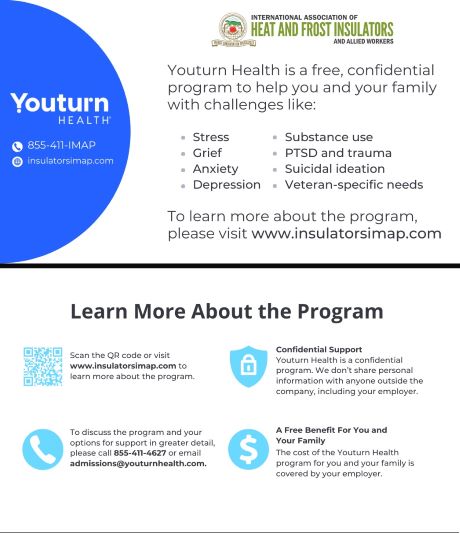
IMAP Wallet Card
Addiction And Mental Health Are Public Health Issues
The laws and systems dealing with addiction and mental health are in need of a radical overhaul. Our guest this week has dedicated her life to the cause. Listen and learn what she doing to help change the landscape and get inspired to fight for changes in your community.
Chris Thompson is the Sober Sidekick
Chris Thompson, of the wildely successful Sober Sidekick app, sits down for an imformative session with Youturn Health Chief Clinical Officer Rich Jones.
Chris Thompson is the founder of Sober Sidekick, the largest digital recovery community in the world. He founded this platform because he believes the opposite of addiction is connection, and believes that his own recovery is dependent on his willingness to be of service to others.
Addiction Is About The Pain Of Mistaken Identity
Paul Noiles has written a book called The Mistaken Identity: A Sacred Journey from Addiction to Awakening. He explains that people use their addiction to hide the fact that they don’t know or like who they are. Everyone experiences trauma and not addressing the root issues will lead to relapse. Listen to this podcast as the nuggets of wisdom and truth fill the conversation.

To access the Youturn Health Featured Courses, click on the course and login with your existing account.
If you do not have an account, click on the button to register for an account.
Please note, the code is IMAP.