IMAP News October 2026
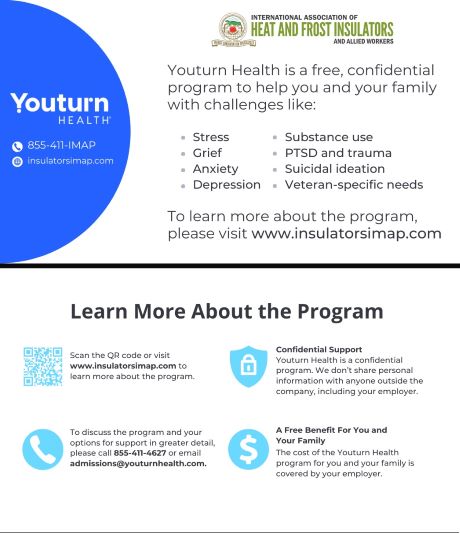
Insulators Member Assistance Program Update
Rich’s Rants
Each month, the LMCT IMAP Newsletter will feature the “rants” of Youturn Health Chief Clinical Officer Rich Jones.
Check out this short video as Rich, who is recognized nationally as a subject matter expert on substance use disorder (SUD) and healthcare and recovery integration, discusses SUD in construction.

October: National Substance Abuse Prevention Month

How to Ask for Help for A Mental Health or Substance Use Issue
If you’re dealing with a substance use or mental health-related challenge, one of the best things you can do is ask for help. So why is it so hard to do?
We are often raised to be self-reliant, and asking for any type of help can make us feel weak or vulnerable and leave us open to rejection or criticism. You also may feel like asking for help makes you a burden or indebted to someone. Additionally, there is a lot of stigma around mental health and substance use. It’s tough to ask for help in general, let alone for something that can feel as big and heavy as struggling with mental health or substance use.

What it Means to Be Resilient
Life has a way of testing all of us. Whether you’re navigating recovery, caring for your family, balancing work, facing loss, or simply trying to get through a difficult season, setbacks are part of being human. While our challenges may look different, the need for resilience is something we all share.
Resilience is often misunderstood as never struggling or always staying strong. In reality, resilience isn’t about avoiding hardship. It’s about learning how to move through it, adapt, and keep moving forward, even when the path isn’t easy.

Loving Someone with Addiction
As I am writing this blog post, my son is in the hospital being treated for ketoacidosis and, yet again another detox. At 37 years old, he can no longer tolerate the effects of alcohol, even after a short binge.
It is such a helpless feeling as a parent to watch as your child, no matter what age they are, destroys their bodies and their lives.
For the past 22 years, I’ve sought to find answers and help. My grief over the life path that this beautiful soul (the youngest of three sons) was and is traveling has pushed me to continue on a quest to learn as much as I can about addiction and treatment options. I’ve discovered that they can all be successful for some. There is not “one right way to get sober”.
October: Depression and Mental Health Awareness Month

Out of the Abyss
I have been to the abyss. More than once. It sucks. It drains every ounce of joy and energy that you have. It paralyzes you. You can’t think. You can’t function. Even doing the most mundane things like showering, making food (because you have no appetite), going outside…all the things…are mountains that are just way too difficult to climb. I sense that you have been there at some point. Is this what “depression” feels like? Is it so paralyzing and polarizing that you become almost “zombie-like” in your day-to-day life? Notice I said I “have been there”…MORE THAN ONCE. So, here’s the thing…

How to Convince “Tough Guys” That Seeking Help Isn’t Weak
The notion that seeking help for mental health issues is a sign of weakness is a pervasive stigma, particularly among men who consider themselves “tough guys.” But let’s be honest, trying to handle everything on your own is like trying to build IKEA furniture without the instructions. Sure, you might eventually get there, but it’s going to be a lot harder and probably involve a few unnecessary trips to the hardware store.

Communicating with Family About Mental Health: How to Offer Support
When one family member struggles with a mental health-related challenge, the whole family is impacted. The good news is that family can provide significant support when a loved one is struggling.
There isn’t one sign that will indicate someone you love is struggling with their mental health. What you do know about your family member is their baseline behavior: How do they normally act? How do they normally look in terms of appearance? What do they normally talk about? While a shift in these baseline behaviors may not mean your loved one is definitely struggling with a mental health-related challenge, it is a good opportunity to check in on them.
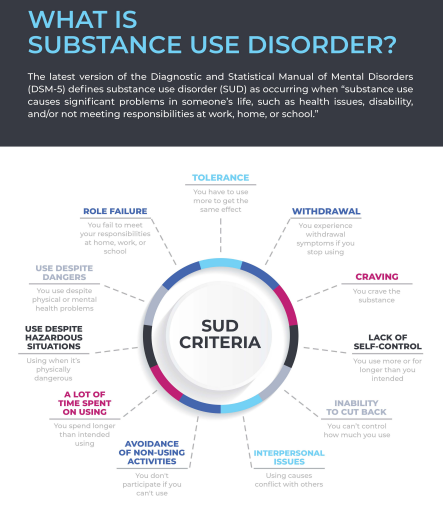
Infographic: What Is Substance Use Disorder?
The latest version of the Diagnostic and Statistical Manual of Mental Health Disorders (DSM-5) defines substance use disorder (SUD) as occurring when “substance use causes significant problems in someone’s life, such as health issues, disability, and/or not meeting responsibilities at work, home or school.”
Download the infographic to learn more about substance use disorder.
IMAP Wallet Card